
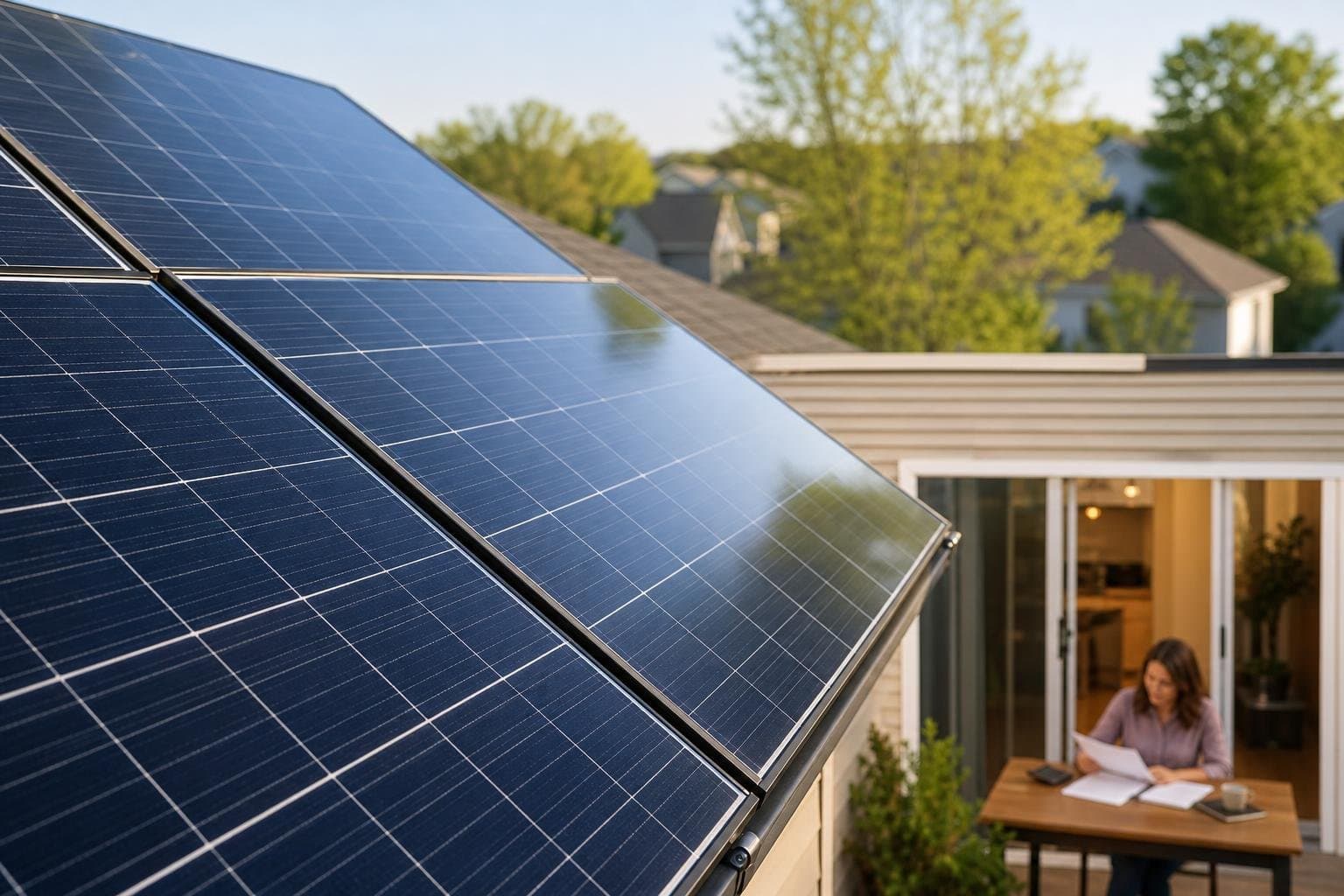
Solar Incentives in Rochester, NY
The federal Residential Clean Energy Credit ended for installations completed after December 31, 2025. Completion date governs this cutoff under Public Law 119-21. (IRS credit guidance; IRS cutoff FAQ)
Use the sources below and confirm your own eligibility before relying on an incentive in a proposal.
New York State Solar Energy System Equipment Credit
IT-255 covers qualifying purchases and written leases or power purchase agreements lasting at least 10 years. Equipment must be installed and used at your principal residence in New York State. (NY IT-255 instructions)
Ask your tax adviser to check your contract, equipment, payments and filing eligibility against the current instructions. Do not assume that a proposal establishes your personal eligibility.
Property Tax: Confirm RPTL 487 Locally
RPTL 487 provides a 15-year exemption for the increase in assessed value attributable to a qualifying solar system, subject to local opt-outs. Counties, cities, towns and villages may disallow it by local law; eligible school districts may do so by resolution. (NY RPTL 487 assessor manual)
The Rochester city school district does not decide separately. This does not guarantee an exemption: the City of Rochester may itself opt out. (NY RPTL 487 assessor manual)
Unverified: whether the City of Rochester, Monroe County or any surrounding town has opted out. Ask your local assessor which taxing jurisdictions allow the exemption at your address, and what application, timing or payment-in-lieu-of-tax requirements apply.
NY-Sun: Regional Availability Is Unverified
NYSERDA publishes NY-Sun incentive levels by region and sector on its MW Block Dashboards. (NYSERDA MW Block Dashboards)
Current residential availability for the Rochester region is unverified here. Ask NYSERDA and your proposed contractor which region and sector apply, whether funding is available for your project, and whether a reservation has actually been confirmed.
Utility and Sales Tax Questions Still to Resolve
Your serving utility, net metering or Value Stack treatment, and New York sales tax treatment are unverified here. Check the utility name on your bill. Ask that utility which tariff and export-credit rules apply to your address and system. Ask the New York Department of Taxation and Finance or your tax adviser how sales tax applies to your transaction.
Questions About Ownership and Financing
NYSERDA offers Residential Energy Storage Program incentives for home battery installations by approved contractors. (NYSERDA residential storage incentives)
Purchase or loan
Ask your tax adviser which purchase expenses qualify under IT-255 and how to treat financing charges. Ask the lender to explain the full contract before signing.
Lease or power purchase agreement
Ask your tax adviser to compare the agreement duration and payment schedule with IT-255. Ask the provider to identify who is claiming each incentive.
Battery storage
Ask your tax adviser and NYSERDA to check storage eligibility separately. Do not assume a solar incentive also covers a battery.
Ask What Records Your Project Needs
Ask your tax adviser which contracts, invoices, payment records, equipment details and completion records to retain. Ask your assessor about property tax application records and NYSERDA about any funding reservation documentation. Request written confirmation of each incentive assumption from the company preparing your proposal.
Solar Incentives FAQ for Rochester Homeowners
Can I claim the federal credit for an installation completed in 2026?+
No. The Residential Clean Energy Credit ended for installations completed after December 31, 2025; paying earlier does not extend the completion cutoff. (IRS cutoff FAQ)
Can a purchase, lease or PPA qualify for the New York credit?+
IT-255 covers eligible purchases and written leases or PPAs spanning at least 10 years, for equipment installed and used at a New York principal residence. Ask your tax adviser to verify your eligibility. (NY IT-255 instructions)
Does Rochester automatically give me a solar property tax exemption?+
Local eligibility is unverified here. RPTL 487 offers a 15-year exemption on solar-related assessed-value increases, subject to local opt-outs. Ask your assessor to confirm each taxing jurisdiction at your address. (NY RPTL 487 assessor manual)
Is NY-Sun residential funding available for my Rochester project?+
Current Rochester-region residential availability is unverified here. NYSERDA publishes incentive levels by region and sector; check its dashboards and ask NYSERDA and your contractor to confirm your project's status. (NYSERDA MW Block Dashboards)
Will solar eliminate my electric bill, and how are exports credited?+
This page does not verify your bill outcome, utility tariff, net metering or Value Stack treatment. Ask the utility named on your bill which charges and export credits would apply; request the assumptions behind any installer estimate.
What paperwork should I keep for incentives?+
Ask your tax adviser which contract, payment and completion records support your tax filing. Ask your local assessor about exemption application records, and NYSERDA about funding documentation. Have each adviser identify the requirements for your particular project.
Use these questions as you review how the matching process works. For help with this resource, contact us.
Ready to Compare Incentive Assumptions?
Ask each company to identify its sources and separate confirmed eligibility from assumptions you still need to check.